
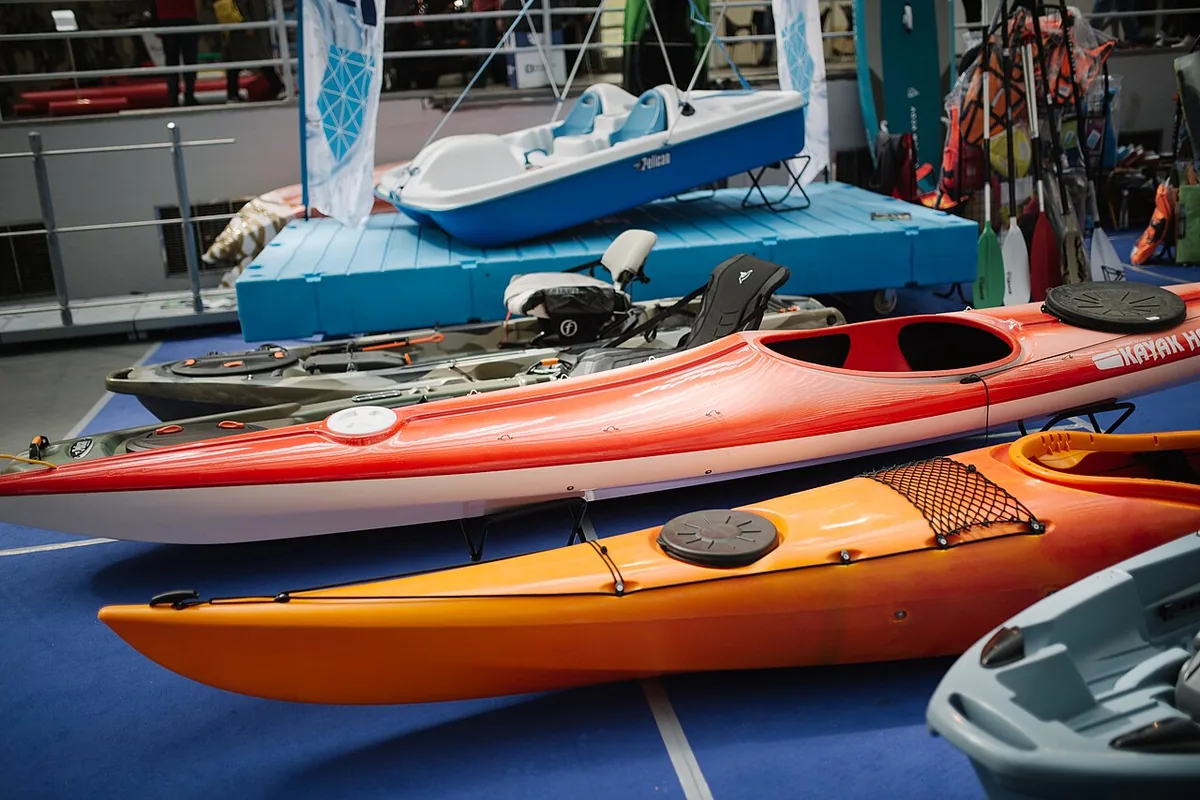
The gear list for a first kayaking trip is shorter than most beginners think. You need a boat, a paddle, a life jacket, and a handful of small items. Everything else is comfort, and comfort items earn their place only if they do not get in the way of paddling.
The essentials — do not launch without these
Kayak. A recreational kayak 9 to 12 feet long. If you are renting, the shop will match the boat to your size — tell them your weight and height honestly so the boat is not overloaded.
Paddle. Sized to your boat’s width: 220 to 230 cm for most recreational kayaks. Two-piece aluminum with plastic blades is fine for a first season. Check that the ferrule clicks firmly and the blades are not cracked.
Life jacket (PFD). A Type III paddling PFD, worn and zipped, not stowed in the hatch. In the United States the Coast Guard requires one wearable PFD per person on board, and children under 13 must wear theirs on federal waters. Try it on sitting down — if it rides up past your chin when you pull up on the shoulders, it is too big. Budget around $40 to $80.
Whistle. The Coast Guard also requires a sound-producing device on board. A pea-less whistle clipped to your PFD costs a few dollars. Three blasts is the distress signal.
Water. At least one litre per person for a two-hour trip, more on a hot day. Paddling is exercise and the sun reflects off the water — dehydration sneaks up fast. A bottle in a cup holder or clipped to the deck works; a hydration bladder in the hatch does not, because you cannot reach it.
Sun protection. Sunscreen, a hat with a brim, and sunglasses with a retainer strap. Water reflects UV, so you burn faster on a kayak than on land, including under your chin and on the tops of your thighs.
Dry bag. Phone, keys, wallet, and a spare layer go in a dry bag (around $15 to $25 for a 10-litre bag), not in your pockets or in an open hatch. Roll the top down three times before clipping it shut — one roll is not waterproof.
Shoes you can get wet. Water shoes, sandals with a heel strap, or old sneakers. You will step into shallow water at the launch, and the bottom may be muddy, rocky, or sharp. Flip-flops come off in the water and are a bad choice.
Worth bringing — comfort and safety extras
Bilge sponge or pump. A sit-inside kayak takes on water from paddle drips and splashes. A large sponge (a few dollars) soaks it up; a hand pump (around $20) is faster. Sit-on-top kayaks drain themselves through scupper holes, so this matters less.
Spare clothes in a dry bag. A dry shirt and a light windbreaker. Even on a warm day, a capsize or a rain shower can leave you cold, and wet clothes steal body heat fast.
Snacks. An energy bar or fruit in a zip bag. You burn more calories paddling than you expect, and a two-hour trip with no food ends with shaky arms.
First-aid basics. A few adhesive bandages, antiseptic wipes, and any personal medication, in a small zip bag inside the dry bag. A full first-aid kit is overkill for a lake trip near shore, but the basics weigh nothing.
A knife or multi-tool. A small folding knife clipped to your PFD is useful for cutting tangled fishing line or rope. Keep it sheathed and secured — a loose knife in a kayak is a hazard.
A tow line or painter. A short length of rope (3 to 5 metres) attached to the bow. It is how you tie up at a dock, drag the boat up a bank, or tow a tired paddler. A floating rope is better than a sinking one.
A map or phone with offline maps. Know the shoreline, the launch points, and where the take-out is. Phone signal is not guaranteed on the water, so download the map area before you launch — and keep the phone in the dry bag.
For longer or cooler trips
- Wetsuit or drysuit if the water is below 60°F (15°C). Cold water is the most underestimated danger in kayaking. Dress for the water temperature, not the air.
- A spray skirt for a sit-inside kayak in choppy water or rain. It keeps the cockpit dry but requires practice to remove quickly — never use one until you have practised a wet exit.
- A paddle float and a bilge pump if you plan to practise self-rescue. A paddle float turns your paddle into an outrigger for climbing back in.
- A headlamp if there is any chance of being out near dusk. A white light is also a legal requirement for kayaks after dark in many places.
What to leave behind
- Cotton clothes. Cotton stays wet, gets heavy, and loses all insulation when soaked. Wear quick-dry synthetics or wool.
- Jewellery, watches, and anything you would cry about losing. The water keeps what it takes.
- A big cooler. A soft-sided cooler with a few drinks is fine; a hard 48-quart cooler turns a stable kayak into a tippy one and eats your legroom.
- Bluetooth speakers. Sound carries far across water and annoys everyone within half a mile. If you want music, use one earbud and keep the other ear open.
- Fishing gear on your first trip. Learn to paddle first, then add fishing. A rod, tackle, and a fish all demand attention you do not have while you are still learning to steer.
- Your car keys loose in a pocket. They go in the dry bag. Every year, kayakers lose keys to the lake.
Packing it in the boat
Heavy items go low and centred — water bottles and the dry bag in the centre of the boat or in the rear hatch, close to the keel line. Light items go in the front hatch or on deck under bungees. Nothing loose on the deck: anything not tied down will slide, float away, or end up under your feet when you need to brace.
Keep the cockpit clear. Your legs need room to brace against the foot pegs, and your paddle needs a free swing. If you have to step over gear to get in, you have packed too much.
The pre-launch check
Run through this before you push off, every time:
- Life jacket on and zipped? Whistle attached?
- Paddle in hand, ferrule locked, blades intact?
- Drain plug in (sit-on-top) and hatches closed (sit-inside)?
- Dry bag sealed and stowed?
- Someone knows where you are going and when you will be back?
- Weather checked in the last hour — wind under 10 to 12 mph?
If any answer is no, fix it on shore. It is always easier there than on the water.