
Kayaking has a good safety record on flat water, and a bad one when beginners ignore the basics. The pattern behind most kayaking accidents is depressingly consistent: a paddler alone, without a life jacket, in cold water or wind, and nobody knowing where they went. Every rule below exists to break one link in that chain.
1. Wear your life jacket — on your body, zipped up
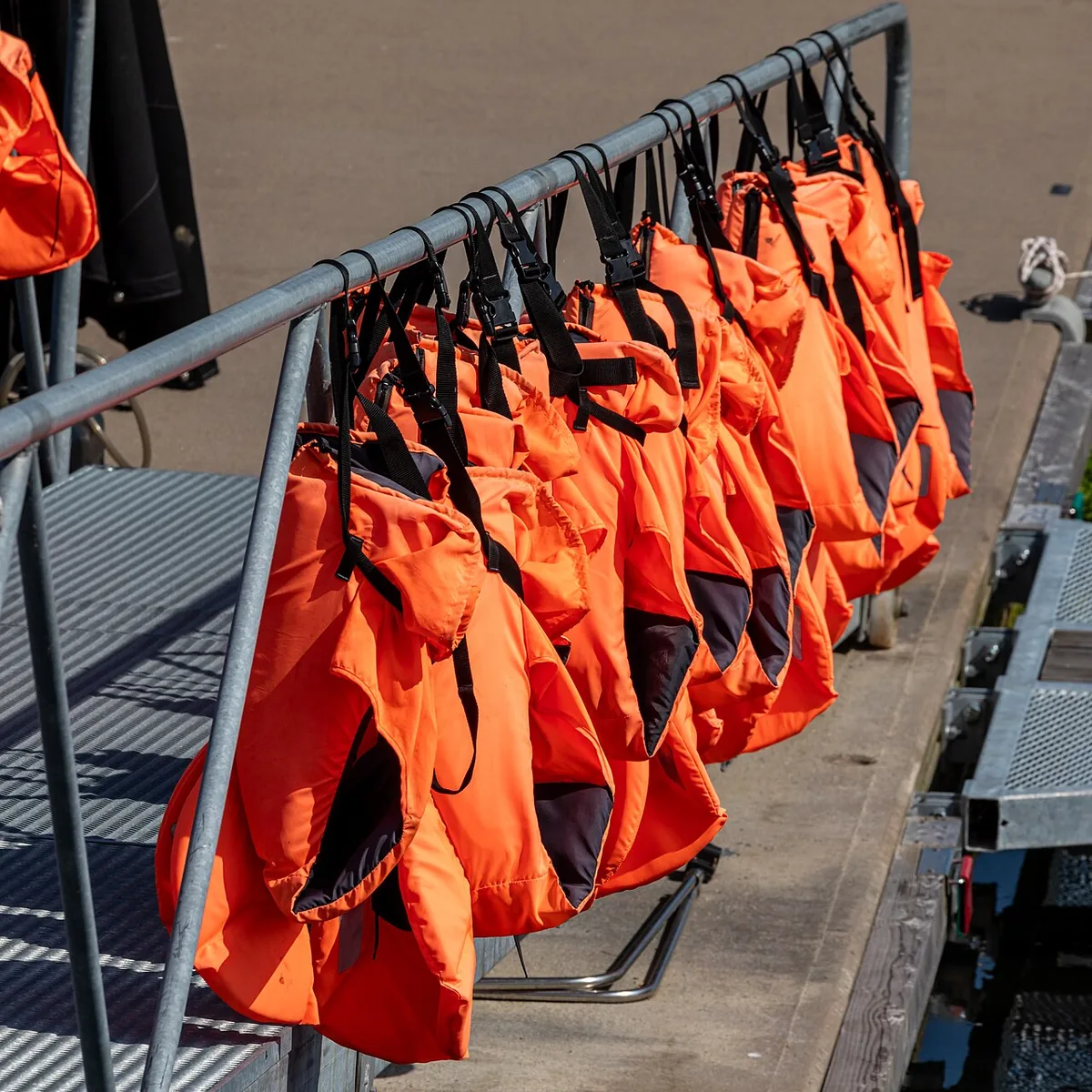
A life jacket in the hatch is decoration. Most kayaking deaths involve a paddler not wearing one, and the reason is simple: a capsize is sudden, cold water can disable your swimming in under a minute, and a blow to the head can knock you out. You do not get a chance to put the jacket on after you are in the water.
Wear a Type III paddling PFD — it is cut for paddling, with large armholes and a short body that does not ride up when you sit. Zip it and tighten the straps so it fits snugly; if you can pull it up past your chin, it is too loose or too big. In the United States the Coast Guard requires one wearable PFD per person on board, and children under 13 must wear theirs on federal waters.
2. Never paddle alone as a beginner
A second person is the most important safety device you can bring. If you capsize and cannot get back in, a partner can hold your boat, tow you to shore, or call for help. Solo paddling is for experienced kayakers with self-rescue skills and a float plan — not for a first season.
3. Tell someone your float plan
Before you launch, tell someone on land where you are going, which direction, and when you expect to be back. A text message takes ten seconds: “Launching at Miller Lake north ramp, paddling the east shore, back by 4 pm.” If you do not come back, that message is what gets the search started in the right place.
4. Dress for the water, not the air
This is the rule beginners get wrong most often. A warm sunny day with 50°F (10°C) water is a cold-water day. Water below 60°F (15°C) can trigger cold shock — an involuntary gasp when you hit the water, followed by rapid loss of muscle control. You can be a strong swimmer and still be unable to climb back into a boat after a minute in cold water.
If the water is below 60°F, wear a wetsuit (at least 3 mm) or a drysuit, even if the air is 80°F. If you would not be comfortable standing in the water up to your chest for ten minutes, you are not dressed for a capsize. Check the water temperature before the trip, not just the air temperature.
5. Check the weather — and check it again at the launch
Wind is the biggest hazard on flat water. A 10 mph wind is hard work in a light kayak; 15 mph can stop a beginner from making headway back to shore; an offshore wind — blowing from the land out over the water — is the worst case, because it carries you away while making the return harder.
Check the forecast the morning of the trip and again at the launch. Look at the water: whitecaps mean the wind is already too strong for a beginner. Watch the sky: dark, building clouds mean get off the water now, not in twenty minutes — lightning and water do not mix, and a storm can arrive faster than you can paddle back.
6. Stay close to shore
On your first trips, stay within a few minutes’ paddle of a place you can land. That way a sudden wind, fatigue, or a capsize is an inconvenience, not an emergency. Paddling across a wide lake on your first outing puts a long stretch of open water between you and safety, with no help in the middle.
7. Know how to get back in — and practice it first
Before your first real trip, practice self-rescue in shallow water where you can stand up. Capsize on purpose, flip the boat upright, and climb back on. For a sit-on-top, the method is to approach from the side, kick hard, and scramble across the middle belly-first, then swing your legs in. For a sit-inside kayak it is harder: you need to empty the cockpit, which usually takes a paddle float and a bilge pump, or a partner’s help.
If you cannot get back in during practice, you will not manage it in a real capsize when you are cold and panicked. Practice until it works, or paddle only with a partner who can help.
8. Learn the wet exit before you use a spray skirt
A spray skirt keeps water out of a sit-inside cockpit, but it also holds you in when you capsize. Before using one, practice pulling the grab loop and sliding out of the boat underwater, in shallow water with a partner watching. If the skirt has no grab loop in front, do not use it. Never use a spray skirt until the wet exit is automatic.
9. Carry a whistle — and know the signal
The Coast Guard requires a sound-producing device on board. A pea-less whistle clipped to your PFD costs a few dollars and carries much farther across water than a shout. Three blasts is the universal distress signal; one blast is a warning to another boat. Keep it on the PFD, not in the hatch — you need it when you are in the water, not when you are sitting in the boat.
10. Watch for boat traffic and stay visible
Kayaks sit low and are hard to see from a powerboat. Stay out of channels and marinas, cross them quickly and at right angles when you must, and never assume a powerboat has seen you. Wear bright colours — a bright PFD, a bright hat, or a bright flag on the stern makes you visible from a distance. In low light, carry a white light: it is a legal requirement for kayaks after dark in many places.
11. Respect strainers, dams, and moving water
Even on a slow river, fallen trees — strainers — are a serious hazard. Water flows through the branches but a boat and a paddler do not, and the current can pin you against the tree. Give every downed tree a wide berth, and portage around anything you cannot clearly see through. Never paddle over a low-head dam: the recirculating water below it can trap even a strong swimmer, and low-head dams are known as “drowning machines” for good reason. If you are unsure about a river section, get out and look first.
12. Know your limits — and quit early
The hardest safety skill is deciding to turn back. If the wind is rising, if you are tired, if the clouds are building, or if anything feels wrong, head for shore. There is no prize for finishing a trip in bad conditions, and the water will still be there next weekend. Most accidents happen when a paddler pushes on instead of turning back at the first sign of trouble.
If something goes wrong
- Capsize: stay with the boat — it floats and is easier to spot than a swimmer. Hold onto it, catch your breath, then work on getting back in or swimming it to shore.
- Someone else capsizes: approach slowly, offer your bow or your paddle as something to hold, and help them climb onto their boat or tow them to shore. Do not capsize yourself trying to help.
- You cannot get back in: stay with the boat, blow three whistle blasts, and wait. Conserve energy and stay warm by keeping as much of your body out of the water as possible.
- Hypothermia signs: uncontrollable shivering, slurred speech, confusion, and clumsiness. Get the person out of the water, out of wet clothes, and into something warm and dry, and call for help.
The short version
Life jacket on, partner with you, float plan told, water temperature checked, wind under 12 mph, close to shore, self-rescue practised. Do those seven things and a beginner kayaking trip on flat water is about as risky as a bike ride on a quiet path. Skip them and you are betting that nothing goes wrong — and on the water, something eventually does.