
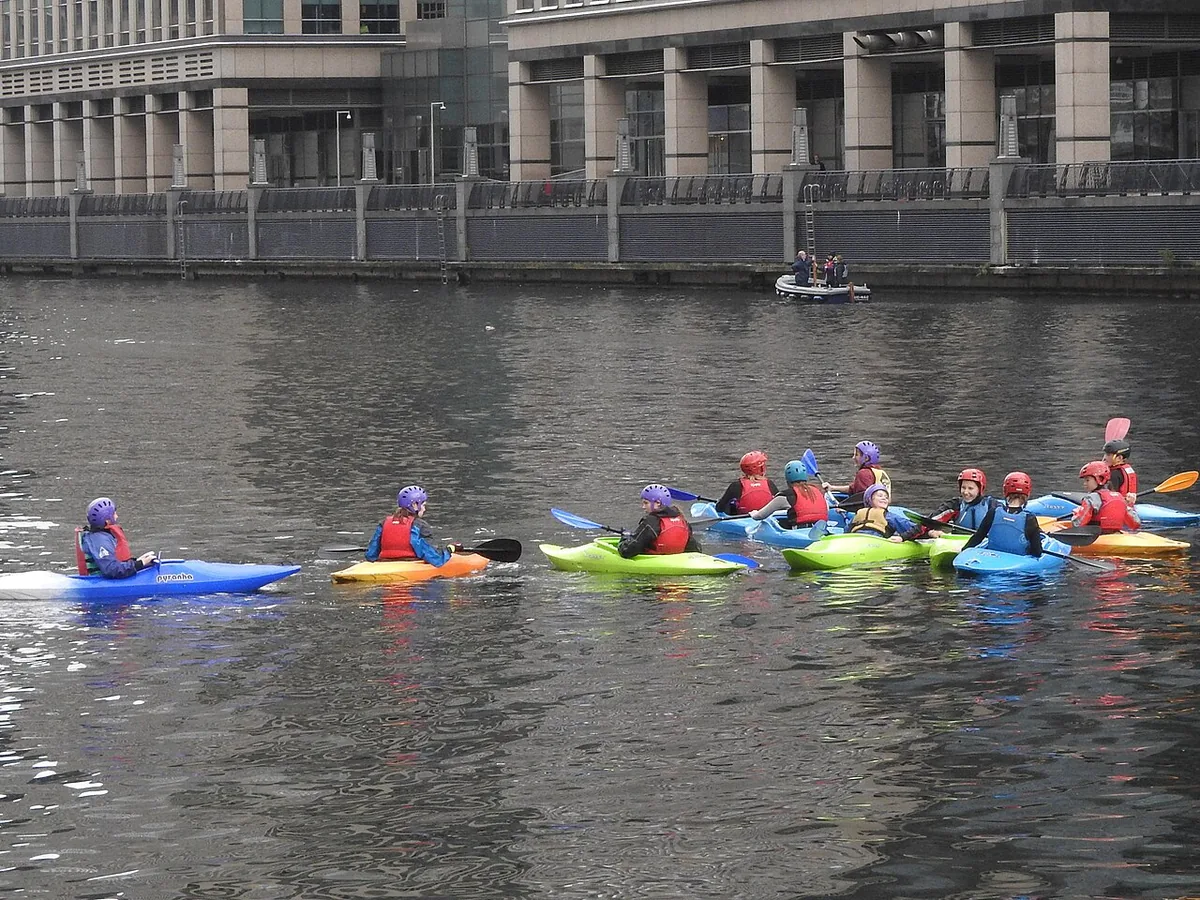
Kayaking with kids is one of the best ways to get a child outside, but it only works when the trip is built around the child — short, calm, and fun — instead of around the adult’s idea of a paddle. A child who has a good first trip will ask to go again. A child who is cold, scared, or bored for two hours will not.
What age can kids start kayaking?
There is no official minimum age, but most paddling instructors suggest:
- Ages 5 to 7: ride as a passenger in a tandem kayak with an adult, on flat water, for 30 to 45 minutes. The child is not paddling — they are enjoying the ride.
- Ages 8 to 10: paddle their own youth kayak on calm water, close to an adult, for up to an hour. Short, light paddles and a boat that fits their size matter enormously at this age.
- Ages 11 and up: paddle their own recreational kayak with an adult nearby, for one to two hours, and start learning real strokes.
The deciding factor is not age but swimming ability, comfort in the water, and willingness. A child who cannot swim should not be in a kayak at all until they have had swimming lessons. A child who is nervous about water should start by sitting in a kayak on land, then in knee-deep water, before any real trip.
The non-negotiable safety rules
A life jacket, always, no exceptions. Children must wear a properly fitted, child-sized life jacket at all times on and near the water — not an adult jacket, which will ride up over a small child’s head. In the United States, children under 13 are required by federal law to wear a life jacket on a boat. Buy a jacket rated for the child’s weight (most are marked 30–50 lb or 50–90 lb), and test the fit: lift the child by the jacket shoulders — if the jacket slides up past their ears, it is too big.
Stay on calm, flat water. A small lake, a slow river, or a sheltered bay. No current, no wind above a light breeze, and a shoreline always close by. Open water and moving water are for older, experienced kids only.
One adult per young child. An adult should be within arm’s reach of a child under 10, either in the same tandem boat or in a kayak right beside them. Do not put two young children in a boat together without an adult.
Short trips. Plan for 45 minutes to an hour on the water for a first trip, including breaks. Children tire faster, get cold faster, and lose interest faster than adults. End the trip while it is still fun, not after it stops being fun.
Sun and cold. Children sunburn and chill faster than adults. Sunscreen, a hat, and a rash guard or quick-dry shirt are essential. If the water is cold, a wetsuit top for the child is worth the money. Bring a dry towel and a warm layer for the car ride home.
Tandem or solo: which boat for a child?
Tandem kayak (adult + child): the best option for children under 8. The adult does the paddling and steering, the child rides in the front seat and can paddle a little if they want to. A two-person recreational kayak or an inflatable tandem both work. The child gets the experience of being on the water without the responsibility of controlling a boat.
Youth kayak (child solo): for ages 8 and up. Youth kayaks are shorter (6 to 8 feet), narrower, and lighter (around 20 to 27 pounds) than adult boats, so a child can actually paddle and carry them. Good options include the Pelican Sonic 80X (8 feet, around $250 to $300) and the Lifetime Youth Wave (6 feet, around $150 to $200). A child in an adult kayak will struggle: the boat is too wide to reach the water, too heavy to steer, and too big to feel safe in.
Towing: if a child in their own kayak gets tired, an adult can tow them by clipping a short tow line to the child’s bow. Agree on the signal in advance — a wave or a whistle blast — so the child can ask for a tow before they are exhausted.
The child’s paddle
A child needs a child-sized paddle: shorter (around 180 to 200 cm depending on the child’s height) and lighter than an adult paddle. An adult paddle is too long and too heavy for a small paddler, and it will tire them out in minutes and teach bad habits. Youth paddles with smaller-diameter shafts fit small hands better. Budget around $30 to $50.
Making the first trip fun
The trip is not about distance. It is about the child having a good time, so build the trip around things a child cares about:
- Let them steer sometimes. In a tandem, hand the child the paddle and let them try. In their own boat, let them choose the direction for a while.
- Plan a destination. Paddle to a beach, an island, a spot with ducks, or a place to skip stones. “Let’s paddle to that beach and have a snack” beats “let’s paddle for an hour” every time.
- Bring snacks and a drink. A waterproof bag with a sandwich, fruit, and a juice box turns a paddle into a picnic.
- Play games. Count the herons, race to the next buoy (slowly), splash with the paddle, or see who can spot the most turtles. A child who is playing is a child who is not thinking about being tired.
- Let them get wet. If the water is warm and shallow, let the child dangle their feet, splash, or even jump off the kayak near shore. A child who is allowed to play in the water will not be afraid of it.
- Teach one skill, not five. Pick one thing for the trip — the forward stroke, or how to steer — and leave the rest for next time. A lesson feels like school; a paddle feels like an adventure.
What to pack for a family trip
- Child-sized life jacket (fitted and tested before the trip)
- Youth paddle, or a short adult paddle
- Sunscreen, hat, sunglasses with a strap
- Water and snacks in a dry bag
- A towel and a dry change of clothes for the child
- A whistle for the child (teach them three blasts means help)
- A tow line
- A phone in a dry bag, with the car keys in it too
Common mistakes parents make
- An adult kayak for a child. Too wide, too heavy, too hard to paddle — the child gives up and decides kayaking is boring.
- A trip that is too long. An hour is plenty for a first trip. Two hours is a test of endurance, not a family outing.
- No backup plan. If the child gets tired, cold, or scared, have a way to end the trip quickly — stay near the launch, keep the tow line handy, and be willing to turn back early.
- Forgetting the child gets cold first. A child in a wet shirt in a breeze chills fast. Bring the warm layer even if the adult does not need one.
- Turning it into a lesson. One skill per trip, taught gently, while paddling somewhere fun. A child who feels tested will not come back.
The goal
The goal of a first kayaking trip with a child is not to cover distance or learn technique. It is for the child to get off the water thinking “that was fun, can we go again?” Keep it short, keep it calm, keep it playful, and the child will do the rest.