
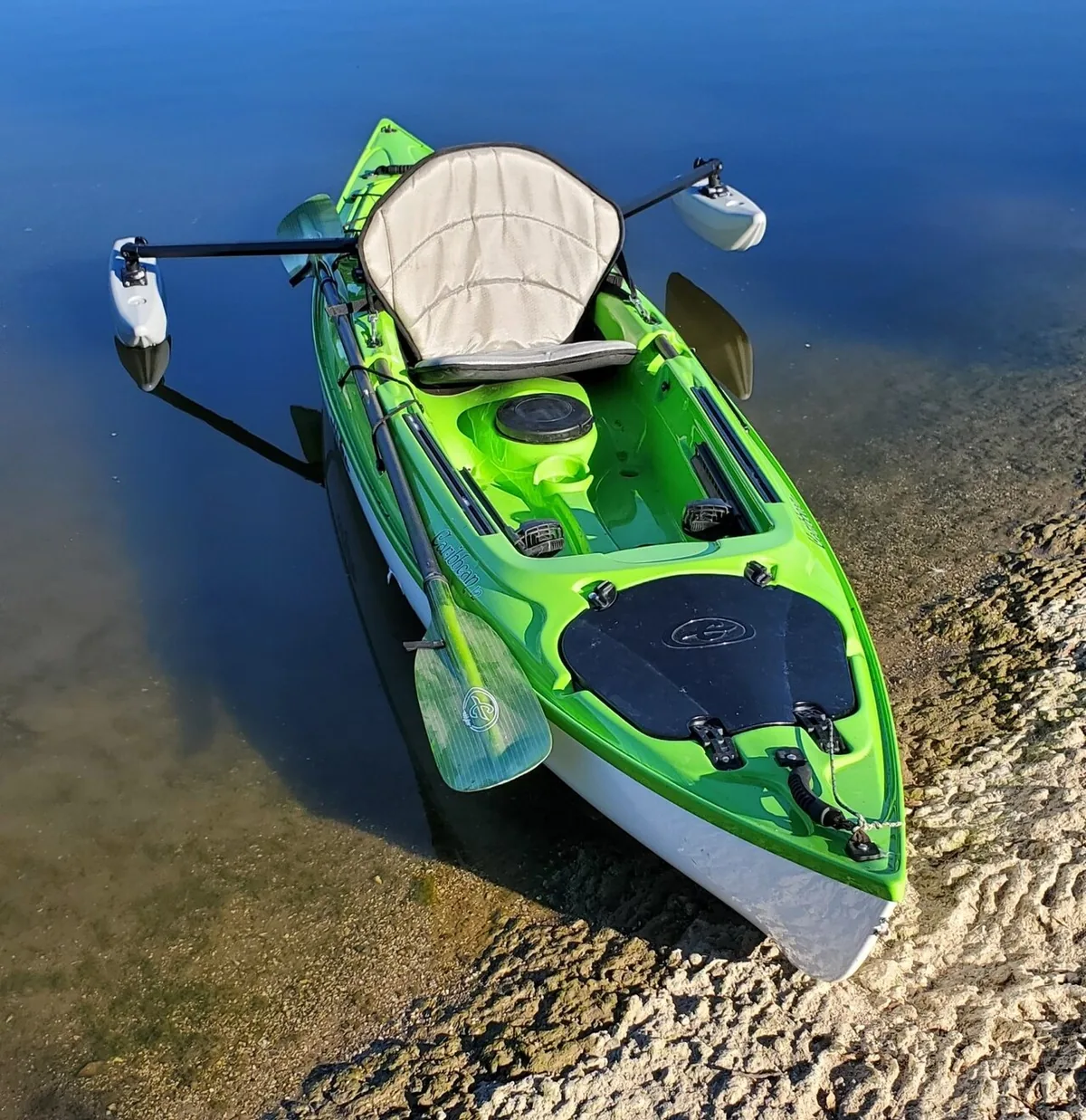
The first choice a beginner faces is not which brand to buy, but which kind of kayak: sit-on-top, where you sit on a moulded deck open to the sky, or sit-inside, where you sit inside a cockpit with the hull around your legs. They look similar from a distance and feel completely different on the water. The right choice depends on where you paddle, how cold the water is, and how you feel about getting wet.
How they are different
A sit-on-top kayak is a sealed hull with a seat moulded into the top deck. You sit on it, your legs are out in the open, and water that splashes in drains out through scupper holes in the hull. There is no cockpit to fill with water, and if you fall off, you climb back on from the side.
A sit-inside kayak has a cockpit — an opening in the deck that you slide your legs into. You sit lower, inside the hull, with a spray skirt optionally sealing the cockpit opening. The hull is narrower, the seat is lower, and the boat encloses your lower body.
Stability
Sit-on-top kayaks are generally wider and flatter, which makes them feel more stable to a beginner. The high seating position can feel tippy at first, but the wide hull is forgiving when you shift your weight. Sit-inside kayaks feel more connected to the boat — your hips and knees brace against the hull — but a narrow sit-inside can feel twitchy until you learn to trust the secondary stability (the resistance you feel as the boat leans further).
For a first boat on calm water, a wide sit-on-top is the more forgiving choice. A wide sit-inside recreational kayak is a close second.
Getting wet
This is the biggest practical difference. On a sit-on-top you will get wet: splashes come over the side, water comes up through the scupper holes, and your legs are exposed to sun, wind, and spray. On a warm day that is pleasant; on a cool day it is cold. Scupper plugs (a few dollars) block the holes and keep you drier, but they also stop the boat draining.
In a sit-inside kayak you stay much drier. The hull shields your legs from wind and spray, and a spray skirt seals the cockpit almost completely. That makes sit-inside kayaks the better choice for cool water, cool weather, and longer trips.
Capsize and rescue
This is where the sit-on-top wins clearly for beginners. If a sit-on-top capsizes, it floats — the sealed hull cannot fill with water. You flip it upright and climb back on from the side, belly-first, then swing your legs in. It is a move most people can learn in ten minutes of practice in shallow water.
If a sit-inside kayak capsizes, the cockpit fills with water and the boat becomes heavy and hard to handle. Getting back in requires emptying the cockpit with a bilge pump, or a partner-assisted rescue, or a paddle float outrigger — all of which take practice. A beginner in a sit-inside kayak who capsizes alone, far from shore, is in a genuinely difficult situation. That is why sit-inside kayaks demand self-rescue practice before a first real trip, and why beginners should paddle them with a partner.
Speed and tracking
Sit-inside kayaks are usually longer and narrower, so they are faster and track straighter — they hold a course with less correction. A 12-foot sit-inside will cruise noticeably faster than a 10-foot sit-on-top with the same effort. For a beginner on a lake, that speed difference matters less than stability and comfort, but it becomes relevant if you start paddling longer distances or in wind.
Comfort
Sit-on-top kayaks have open seating, so you can move your legs, dangle them over the side, and get in and out easily — a real advantage for older paddlers, larger paddlers, or anyone with stiff knees. The downside is sun exposure and a wet seat. Sit-inside kayaks give you a backrest and thigh braces that connect you to the boat, which is more comfortable on a long paddle, but the cockpit can feel confining if you are tall or broad.
Storage and transport
Sit-on-top kayaks are heavier — the same length boat typically weighs 5 to 10 pounds more than a sit-inside, because the deck moulding adds material. They are also harder to stack and take up more space. Sit-inside kayaks are lighter and can be stored on their side or hung from the ceiling, but water can pool in the cockpit if stored outside, so they need a cockpit cover.
Both types car-top the same way: upside down on foam blocks or a roof rack, with bow and stern lines. Neither should be stored in direct sun for months — UV degrades the plastic.
Cost
At the entry level, sit-on-top kayaks are usually a little cheaper for the same length, because the manufacturing is simpler. A good beginner sit-on-top runs around $350 to $550; a comparable sit-inside runs around $400 to $650. The difference is small enough that it should not decide the purchase — the paddling experience should.
Which one should you buy?
Buy a sit-on-top if: you paddle warm water, you want the easiest possible rescue, you like to swim from the boat or fish, you have stiff knees or a larger build, or you just want the simplest, most forgiving first boat. This is the right choice for most beginners on lakes.
Buy a sit-inside if: you paddle cool water or cool weather, you want to stay dry, you plan longer trips where speed matters, or you like the connected, athletic feel of a cockpit. Take an intro course and practise self-rescue before your first solo trip.
Rent both first if you can. A half-day rental of each type will tell you more than any comparison article. Pay attention to how easy it is to get in and out, how wet you get, and how the boat feels when you lean — those three things matter more than any specification.
The short answer
For most beginners, a sit-on-top is the safer and simpler first kayak. It forgives mistakes, it cannot swamp, and getting back on is a skill you can learn in an afternoon. A sit-inside is the better boat once you have some experience and want to paddle further, faster, and drier. Start with the boat that keeps you safe while you learn — you can always trade up.